Article by Drs Anina and Robin Lee
There is a story almost every Hermanus resident has heard. Sir William Hoy, General Manager of the South African Railways, supposedly prevented the railway from reaching Hermanus because he wanted to preserve the town's peaceful, exclusive character. The railway stopped at Bot River, and Hoy made sure it stayed there.
It is a good story. Unfortunately, it isn't quite the truth.
The real story is rather more interesting.
Hoy became General Manager of the South African Railways in 1910, at a time when extending railway lines into every small town was an expensive business. His solution was to establish railway lines only where they made economic sense and use road transport to connect smaller communities to the rail network.
Hermanus was an early beneficiary – or guinea pig – of this idea.
On 26 December 1912, the first South African Railways passenger bus arrived in Hermanus from Bot River. Bot River was the railhead; Hermanus was connected to it by road. The service was sufficiently successful to become the forerunner of the extensive South African Railways road-motor transport system that subsequently spread across the country.
There was, of course, a problem. What do you call the place where railway passengers arrive when they have travelled the last part of their journey by bus?
A station, apparently.
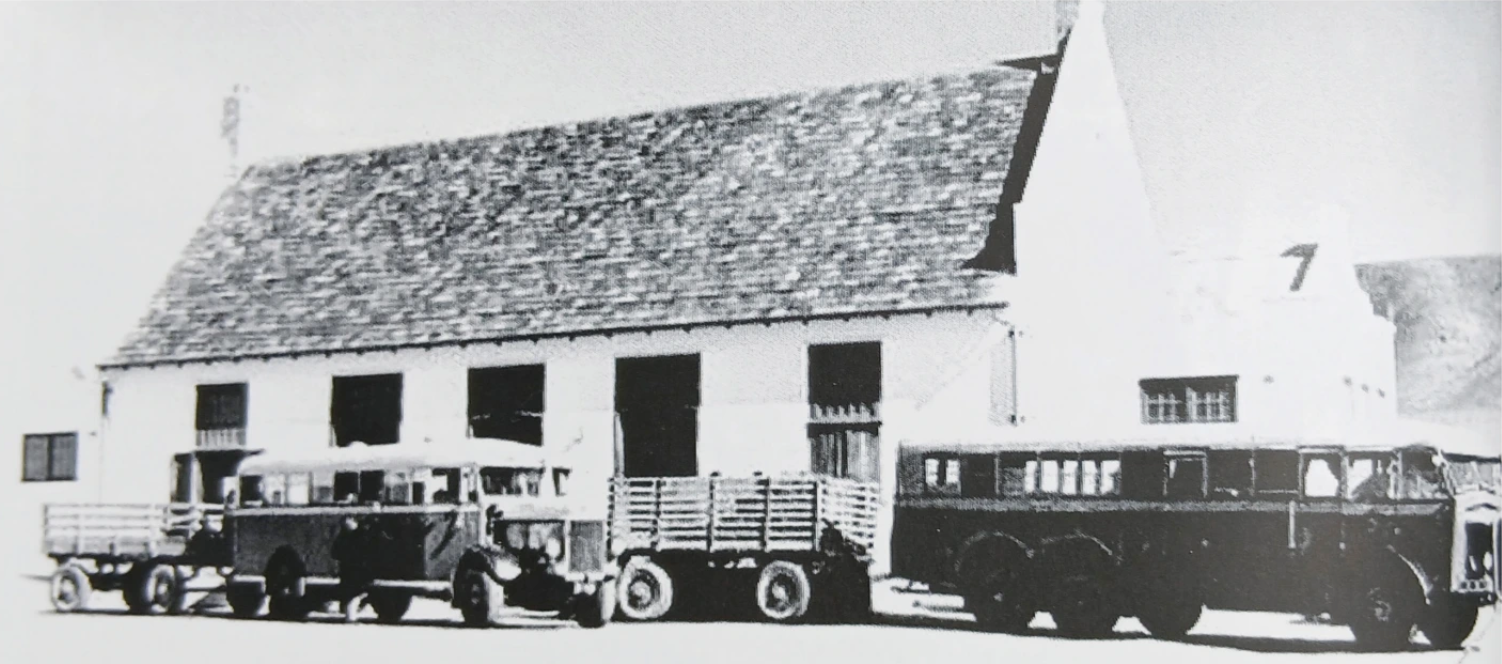
The early buses stopped in Main Road, opposite St Peter's Church. Photographs in Hermanus: A Photographic History 1855–1955 show the South African Railways buses there, and one photograph shows the premises that served as the bus station. The pavement was raised and narrowed at this point, apparently to make it easier for passengers to board and leave the buses.
For nearly thirty years, this was Hermanus's connection with the railway.
Then, in 1941, the South African Railways built a new bus station in Mitchell Street, on the corner of Lord Roberts Road. It was a handsome Dutch-style building, considerably more commodious than the rather makeshift Main Road premises.
And here we have an eyewitness who is particularly difficult to argue with.
Aletta Barendina (Berdine) Luyt, daughter of P. John and Joey Luyt of the Marine Hotel, kept a detailed diary of life in Hermanus during the 1940s. On 19 July 1944, she recorded the ceremonial opening of the new building by Mr Louis Esselen. Afterwards, Esselen and the railway officials had lunch at the Marine Hotel.
Then she added a wonderfully matter-of-fact clarification:
“The new Station (it is a bus station, really, as the railway comes no nearer than Bot River)…”
There it is.
Berdine wasn't writing decades later to correct a local legend. She was recording the opening of the building as it happened. She knew the people involved, knew the town.
So the building we still commonly call Hermanus Railway Station was, in fact, built as a South African Railways bus station.
No train ever arrived there.
This doesn't mean Sir William Hoy "stopped the railway" because he wanted to keep Hermanus exclusive. It means he made an economic decision that made sense within his broader approach to railway development. Building an expensive branch line from Bot River to Hermanus was not considered worthwhile; putting passengers on a bus was considerably cheaper.
And there is a delightful irony in the story. Hoy's decision was not an attempt to keep Hermanus isolated from the outside world. Quite the opposite. He was bringing Hermanus into the national railway network by road.
Perhaps it is time to retire the romantic story of the railway that Hoy refused to bring to Hermanus.
The handsome old building in Mitchell Street really was a railway station – but only because the South African Railways owned the buses.
It just never needed a railway.
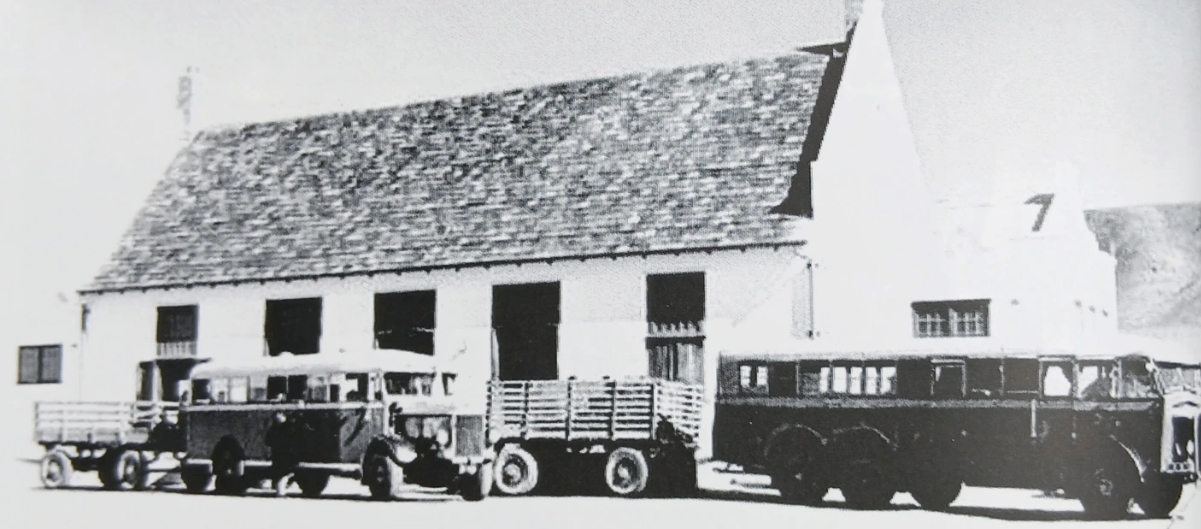
Photo Courtesy of The Village News